Why Can't You Go In The LaLaurie Mansion?
The LaLaurie Mansion at 1140 Royal Street is a private home, not a museum. Here is the ownership history, the access rules, and the honest ways to see it.
Why Can't You Go In The LaLaurie Mansion?
You can't go inside the LaLaurie Mansion because it is a privately owned residence, not a museum or attraction. Since late 2024 it has been owned and lived in by Lance Zaal, founder of US Ghost Adventures, who bought it in a sale reported at roughly $4.3 million to $6 million depending on the outlet. No tour product on this site, or any other, takes visitors inside.
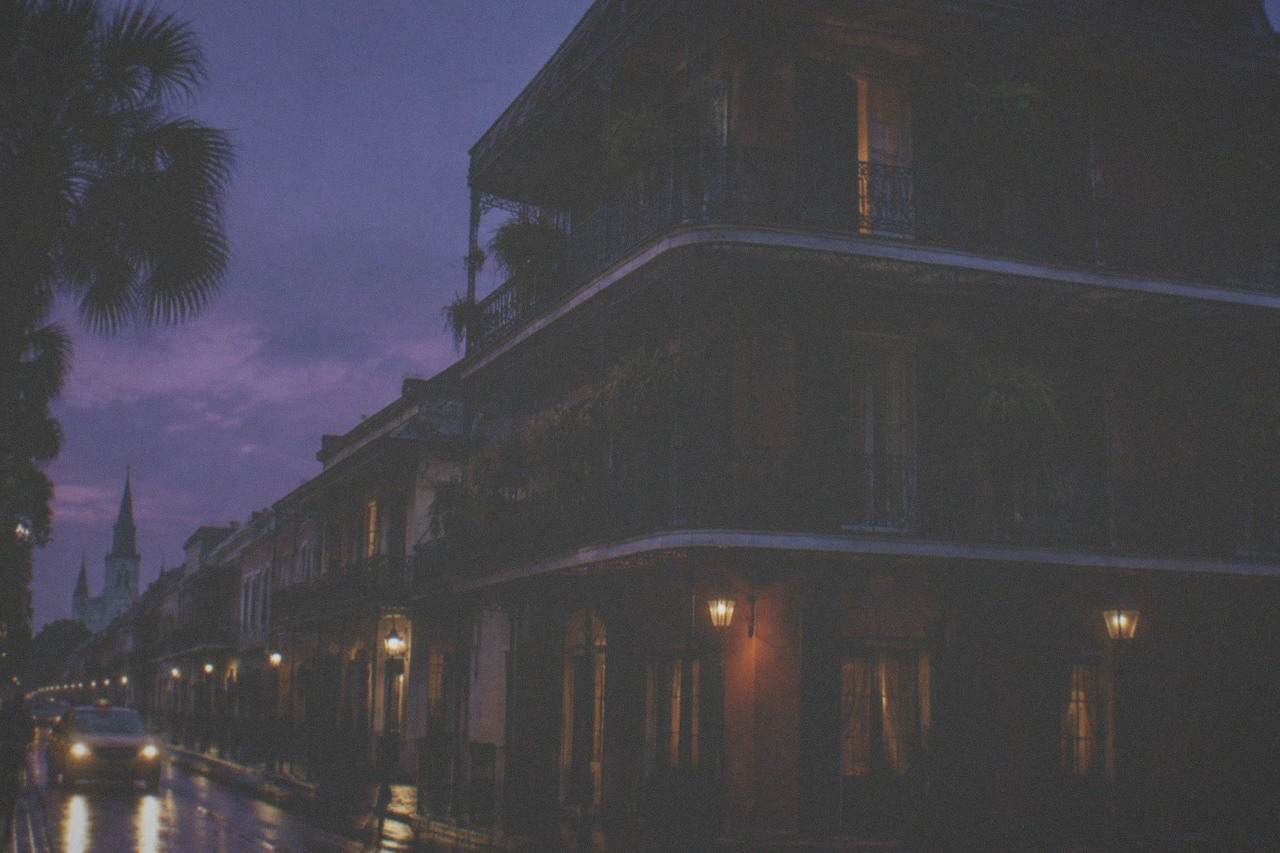
That answer surprises people. The house at 1140 Royal Street is arguably the most famous haunted building in America, the subject of books, documentaries and a memorably lurid segment in a well-known horror anthology. Visitors arrive in the French Quarter expecting a ticket booth, or at least a lobby. What they find is a three-story Greek Revival townhouse with its shutters closed, its ironwork balconies quiet, and a front door that opens for exactly one person's guests.
The gap between the legend and the reality is the story here. The house is real. The documented history of what happened inside it during the LaLaurie family's tenure is real, and it is genuinely grim. But the building itself has spent almost its entire existence as someone's home, and its current owner has been explicit that it stays that way for now.
That does not make the block a dead end for visitors. The exterior is one of the most photographed facades in the Quarter, and several walking tours stop within a few yards of it, including the "21+ Pub Crawl, LaLaurie" run by New Orleans Ghost Adventures, which passes the mansion and tells its story from the street. The honest version of a LaLaurie visit is an exterior one, and this article explains why, using the verified ownership record rather than the folklore.
Who Owns The LaLaurie Mansion Now?
Lance Zaal, founder of the tour company US Ghost Adventures, has owned 1140 Royal Street since a sale that closed around October 21, 2024, and he lives there as his primary residence. Reported sale prices vary by outlet, roughly $4.3 million in one account and about $6 million in others, but the buyer and the timing are consistent across sources.
Zaal is a curious owner for this house, and that is part of why the "can we go in" question keeps coming up. His company operates publicly accessible haunted properties elsewhere, most famously the Lizzie Borden House in Fall River, Massachusetts, which runs as a museum and even lets guests stay overnight. When the sale made the local press, some readers assumed the LaLaurie Mansion would follow the same path, opening for ticketed interior tours under a haunted-hospitality brand. That has not happened. Zaal has stated the mansion is his home, and while a 2024 interview found him "not opposed to opening the house to the public in the future," no such plan has materialized, per the nola.com reporting on the sale.
His tenure has not been entirely quiet. In July 2026 an unpermitted marketing stunt by a Texas company projected images of blood, flames and skulls onto the mansion's facade from a Cybertruck-mounted projector, without the owner's approval or the city's. Zaal publicly disavowed it, and local commentary roundly criticized the stunt for sensationalizing a site whose real history involves the torture of enslaved people. The episode is worth knowing because it illustrates the tension the house lives under: everyone wants a piece of it, and its owner is trying to control how it is treated.
Zaal has also been doing genuine historical work on the property. He has researched the mansion's fuller documented past beyond the famous horror, including its use as a school during the Reconstruction era, established a preservation initiative around the address, and has a book on the property's history scheduled for publication in October 2026. So the current chapter of 1140 Royal is not a neglect story. It is a private owner actively researching the building while declining, so far, to open it.
What Happened In The House That Made It Famous?
A fire at the Royal Street home of Delphine and Louis LaLaurie led neighbors and rescuers to discover enslaved people held in the attic in conditions of extreme cruelty. The house was mobbed, the family fled, and the story entered New Orleans legend. The documented core is the fire, the discovery and the flight; the embellishments grew later, as the tours tell it.
The record, as far as press accounts from the era and later historians can establish it, is this. A kitchen fire broke out in the mansion. When people entered to fight it, they found enslaved workers chained in the attic, some reportedly in appalling physical condition. A crowd gathered outside the mansion within days, damaging the house, and the LaLaurie family left the city, eventually for Paris. Delphine LaLaurie remains one of the most reviled figures in the city's history, and the nickname "the socialite of Satan," which circulates on tours, captures how completely her reputation collapsed.
What the house is not, in the historical record, is a sealed crime scene preserved for visitors. It changed hands repeatedly after the family's flight. It served as a furniture store, a school during the Reconstruction era, a home for aged and indigent residents, and a series of private residences. A later owner reportedly died there in circumstances the tours like to embellish, but the building's long afterlife was mostly ordinary city life: commerce, schooling, tenancy.
The famous hauntings attached to the address, the phantom footsteps, the cries attributed to attic victims, the story of Nicolas Cage's brief ownership and his reported unease there, all belong to the legend layer. They are attributed in tour narratives, not verified in records. The nola.com history of the mansion is a good baseline for separating the two layers, and the distinction matters for anyone deciding whether an exterior visit is "enough." The building's power comes largely from its facade and its street presence, which is exactly what a visitor can still experience.
Is The LaLaurie Mansion Really Haunted?
There is no verified evidence of paranormal activity at 1140 Royal Street. The haunting claims are legend and operator narrative, decades of reported sightings, ghost-hunter visits and celebrity anecdotes, but nothing documented. The house's real, documented history is disturbing enough that the folklore has always had fertile ground.
This site is honest about the line between the two. The torture of enslaved people in the LaLaurie household is documented history. The specific hauntings, the reported apparitions, the sounds attributed to the attic, the curse said to afflict subsequent owners, are stories. They are good stories, and they are the reason several hundred people a night stand outside the mansion's balcony on Royal Street listening to a guide. But a reader planning a trip should know that no roster tour promises, or could honestly promise, anything supernatural.
The celebrity chapter feeds the legend more than most facts do. Nicolas Cage bought the mansion around 2007 for approximately $3.45 million, reportedly wrote a chapter of a novel while living there, and lost the property to foreclosure in 2009 amid his wider financial troubles. He has had no connection to the house since. Texas energy trader Michael Whalen owned it from 2010 until the 2024 sale and carried out extensive renovations, which is the least gothic stretch in the building's recent history and therefore rarely mentioned on tours.
If the question of whether the house is "really" haunted is your main interest, the deeper treatment lives in our article on whether the LaLaurie Mansion is really haunted, and the full planning page, including what an exterior visit looks like hour by hour, is our LaLaurie Mansion tour guide.
What Can You Actually See From The Street?
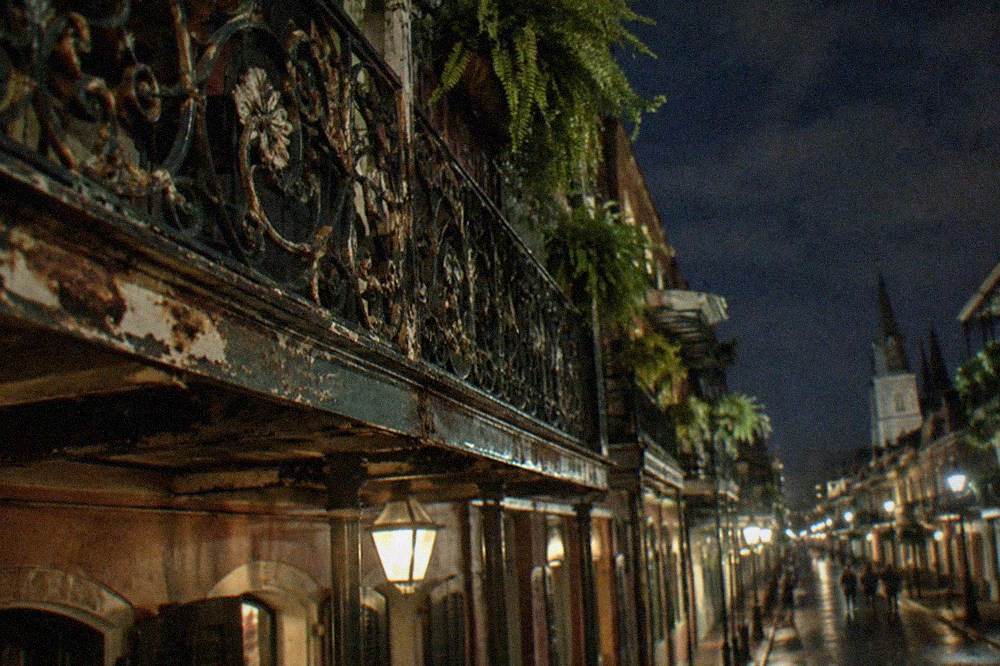
Plenty. The mansion's Royal Street facade, its ironwork galleries, tall shutters and carriage arch, is fully visible from the public sidewalk, and it is one of the most photographed private homes in the French Quarter. Guides stop within a few yards of it nightly. You just cannot cross the threshold, and no tour should suggest otherwise.
The viewing experience is genuinely good, which is worth saying plainly because "you can't go inside" sounds like a consolation prize. The house occupies the corner of Royal and Governor Nicholls streets, and its scale is startling next to the lower neighboring buildings. The ironwork alone, the triple-tier galleries with their scrolling brackets, is among the finest in a neighborhood famous for it. At night, with the street lamps and the quiet of that corner of the Quarter, the facade does a lot of the atmospheric work the interior is imagined to do.
There is an etiquette point that matters. Someone lives there. The current owner has spoken publicly about the tension between his privacy and the house's fame, and the July 2026 projection stunt showed how quickly attention to the address can curdle into intrusion. Standing on the sidewalk listening to a guide is fine and expected; peering into windows, knocking, or trying doors is not. The tours that stop here are structured around exterior storytelling precisely because that is what is appropriate.
The practical way to see the mansion with a story attached is a guided walk. The "21+ Pub Crawl, LaLaurie" from New Orleans Ghost Adventures, 2 hours from $37, adults 21 and over with valid government photo ID, passes the mansion and continues to Lafitte's Blacksmith Shop Bar, with a complimentary drink at the last stop. The "Voodoo and Vampire Themes" walk from The Witches Brew Tour Company, from $33, 4.5 across 3,221 reviews, covers the mansion within a broader vampire-and-voodoo route. And the "Haunted History, Guided Walk" from Haunted History Tours, from $30, 4.5 across 2,293 reviews, is the classic format for it.
How Did The House Become Off-Limits To Tours?
There was never a public-access era to end. The mansion has been zoned residential and privately owned through the entire modern tourism boom, and every operator that tells its story does so from the sidewalk. The 2015-era licensing fights over cemeteries sometimes get confused with this house, but the LaLaurie restriction is simply private property law doing what it does.
A quick comparison helps, because New Orleans is full of buildings whose access rules have a specific legal history. St. Louis Cemetery No. 1, for instance, went licensed-guide-only in March 2015 by Archdiocesan policy after vandalism, so the only way in is an authorized tour, a rule with a documented institutional origin. Lafayette Cemetery No. 1 closed to general walk-in visitation in September 2019 and remains closed, with historical, non-ghost tours from the Preservation Resource Center scheduled to begin in early October 2026. Those are policy closures with public processes behind them.
The LaLaurie Mansion is a different category. It is a private home, and private homes in New Orleans, as everywhere, are simply not open to the public unless their owners choose. The relevant question is not "why is it closed" but "why would anyone expect it to be open," and the answer is that the legend has outgrown the building's legal status. Decades of documentaries and, more recently, dramatized retellings have made 1140 Royal feel like a national landmark people are entitled to enter. It is a landmark in reputation only; it holds no museum designation, runs no ticketing, and posts no hours.
This is also why skepticism is warranted toward any tour or ticket that implies interior access. If a listing anywhere promises to take you inside the LaLaurie Mansion, it is misrepresenting what is possible. The honest products say "exterior" or "see the mansion from the street," and the operators on this roster all frame it that way.
Which New Orleans Tours Pass The LaLaurie Mansion?
Several roster tours include the mansion on their routes, all viewing the exterior only. The haunted pub crawls pass it with bar stops built in, the French Quarter ghost walks stop at it as a headline story, and the longer themed walks fold it into vampire and voodoo narratives. None enters, and all are candid about that.
The table below compares the formats that reach the mansion's block, using the verified listing details for each product.
| Tour (decision name) | Format | Price | Rating | Duration | Mansion access |
|---|---|---|---|---|---|
| 21+ Pub Crawl, LaLaurie | Haunted bar walk, 21+ | From $37 | 4.5 from 2,212 reviews | 2 hours | Passes exterior, stops nearby |
| Voodoo and Vampire Themes | Themed walking tour | From $33 | 4.5 from 3,221 reviews | 1.5 to 2 hours | Exterior stop on route |
| Haunted History, Guided Walk | Classic ghost walk | From $30 | 4.5 from 2,293 reviews | 2 hours | Exterior stop on route |
| Ghost and Vampire Walk | Vampire-themed walk | From $21 | 4.7 from 2,541 reviews | 2 hours | French Quarter route, ends at Jackson Square |
Choosing among them is mostly a question of format rather than content. If you want the LaLaurie story with a drink in hand, the pub crawl is the natural fit, and the go-cup custom of the French Quarter makes that easy: the city's open-container allowance covers plastic cups within the defined Quarter zone, upriver of Canal Street, lakeside of Rampart, downriver of Esplanade, with glass banned outright. If you want the fullest single telling of the LaLaurie story with the most narrative time spent on Royal Street, the classic ghost walk format does that. If the vampire folklore is what drew you to the mansion in the first place, the themed walks connect it to the wider Casket Girls and vampire-sighting legends, as the tours tell them.
For a broader look at how the formats differ, our guide to New Orleans ghost walking tours breaks down the walking formats, and the best ghost tour guide compares the top-rated options across the whole roster.
Should You Plan A Visit Around The Mansion?
Yes, if you calibrate expectations. The LaLaurie Mansion is a five-minute stop on a good walking tour, not a destination you can spend an afternoon inside. Plan an evening in the French Quarter, book a guided walk that includes it, and treat the facade as what it is: the visible remnant of one of the darkest documented stories in the city.
Timing is straightforward. The themed and ghost walks run in the evening, which suits the mansion's atmosphere; the corner of Royal and Governor Nicholls is quieter than the Bourbon Street blocks a few streets over, and the night tours use that stillness well. October is the peak month for this kind of visit, the Krewe of Boo parade, the city's official Halloween parade since 2007, rolls on Saturday, October 24 at 6:30pm, and tour availability stays busy through the season, so booking a few days ahead is sensible. Every product on the roster carries free cancellation up to 24 hours before, so there is little risk in locking in a time early.
What to bring matters less than what to leave behind. Comfortable shoes for the uneven Quarter sidewalks, an ID if you are on a crawl (21 and over, no exceptions), and no expectation of a door opening on Royal Street. If your group includes children, the walking ghost tours are the family-friendly format, while the crawls are adults-only and the after-dark bus tour with EMF detectors, the "Night Bus Tour, Exclusive Access," states it is not suitable for children under 10.
One last calibration on the legend itself. The reason the mansion holds its place in the haunted-tour canon is not the ghosts; it is the history, and the history is visible only in the sense that it happened at this address. The building's facade is a backdrop for a story a guide tells. That is a genuinely worthwhile experience, and it is the only one on offer, which is exactly what New Orleans Haunted Tours is here to help you book honestly.
Common Questions About The LaLaurie Mansion
Why can't you go in the LaLaurie Mansion?
Because it is a privately owned residence. Lance Zaal, founder of US Ghost Adventures, has owned 1140 Royal Street since late 2024 and lives there. The house is zoned residential, holds no museum designation, and no tour product offers interior access. Every legitimate tour views and discusses it from the street.
Is the LaLaurie Mansion really haunted?
There is no verified evidence of paranormal activity at the mansion. The hauntings are legend and tour narrative. What is documented is the fire, the discovery of enslaved people held in appalling conditions in the attic, and the family's flight from the city. The real history is why the folklore attached to the address endures.
Who owns the LaLaurie Mansion now?
Lance Zaal, founder of the haunted-tour company US Ghost Adventures, bought it in a sale that closed around October 21, 2024, at a reported price of roughly $4.3 million to $6 million depending on the outlet. He lives there as his primary residence and has stated he is not opposed to opening it publicly in the future, but no such plan exists.
Did Nicolas Cage own the LaLaurie Mansion?
Yes, briefly. He bought it around 2007 for approximately $3.45 million and lost it to foreclosure in 2009. Texas energy trader Michael Whalen then owned it from 2010 until the 2024 sale to Zaal, renovating it extensively during that period.
Which tours pass the LaLaurie Mansion?
Several French Quarter tours include it on their routes, all exterior only. The Haunted Pub Crawl in New Orleans passes the mansion and visits Lafitte's Blacksmith Shop Bar. The Voodoo and Vampire Themes walk, the Haunted History guided walk, and the Ghost and Vampire Walk all stop at or pass the address while covering the wider Quarter.
Can the LaLaurie Mansion be visited on a pub crawl?
Yes, from the outside. The Haunted Pub Crawl in New Orleans passes the mansion on its route. It is strictly 21 and over with valid government photo ID, runs 2 hours from $37, and includes a complimentary drink at the last stop. It views the mansion from the street, like every other tour.