Is The LaLaurie Mansion Really Haunted?
The documented history of 1140 Royal Street, the legends the ghost tours tell outside its walls, and the honest answer to whether anyone has ever proven the LaLaurie Mansion is haunted.
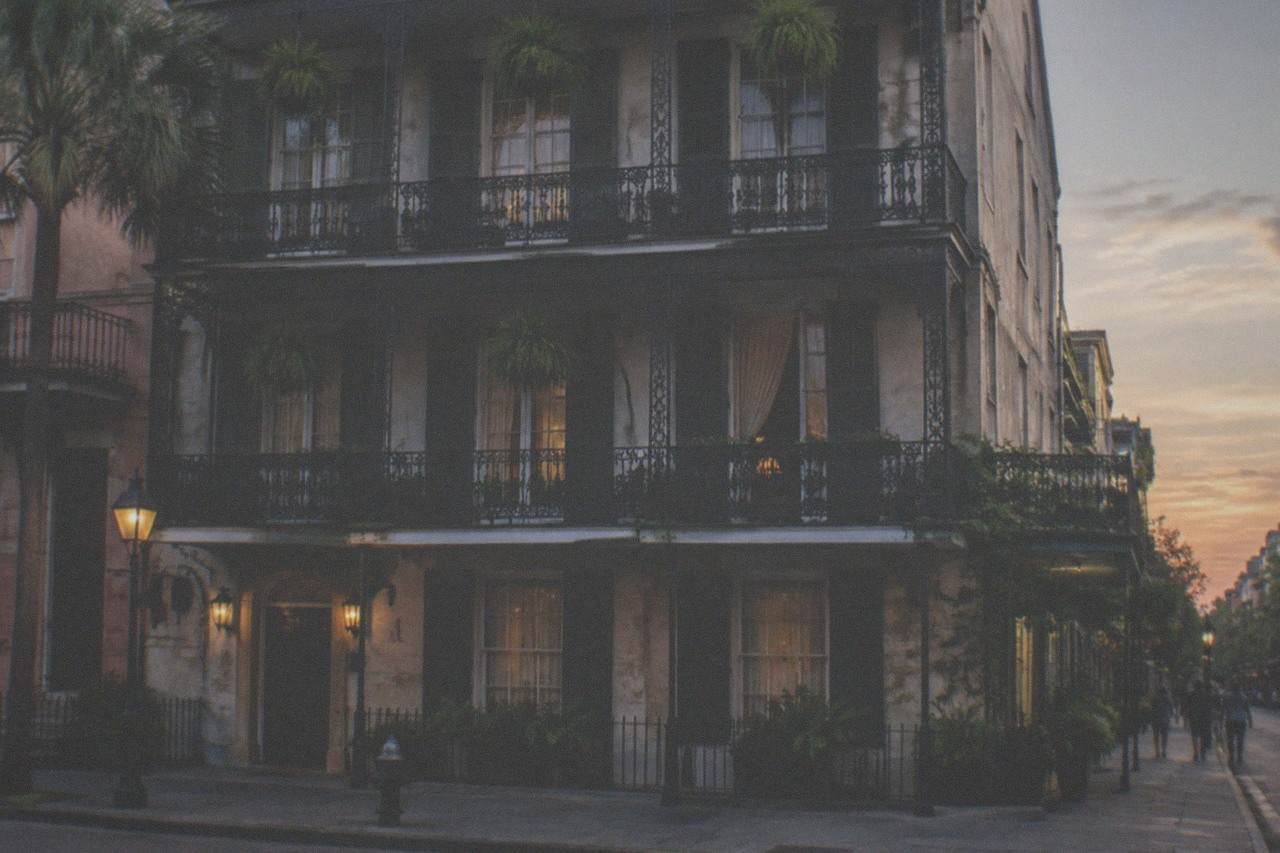
The most famous haunted address in New Orleans is a private residence with a locked front door. The LaLaurie Mansion at 1140 Royal Street anchors more ghost-tour patter than any other building in the French Quarter, and every night of the year, groups stand on the banquette outside it and listen to a story that blends a real, documented atrocity with generations of accumulated legend. The question of whether the house is actually haunted has a more complicated answer than the tours imply, and the two threads are worth separating.
Is The LaLaurie Mansion Really Haunted?
No credible evidence has ever established paranormal activity at 1140 Royal Street, and no tour on this roster claims firsthand proof of it. What the house has is a documented and horrifying kitchen fire, a chain of owners who reported strange experiences, and a haunting reputation that the city's ghost-tour industry has retold from the sidewalk for decades. The legend is real as a legend; the haunting itself is unproven.
That distinction matters more here than at almost any other stop on a New Orleans ghost tour. Many so-called haunted locations carry a thin historical record and a thick folklore layer, so there is little to contradict. The LaLaurie Mansion is the opposite case: the historical record is unusually rich, because the events of the fire that made the family infamous were reported in contemporary newspapers and have been revisited by historians ever since, while the paranormal claims stacked on top of it remain exactly as unverifiable as they were when the first retellings appeared.
The honest framing is this. The documented history of the house is grim enough that nobody needs to invent ghosts for it to be worth a visit. The haunting stories are a separate layer, told by tour operators as operator narrative, believed by some owners enough that they fled the house, and supported by no evidence that would satisfy anyone applying a normal standard of proof. A good tour tells you which thread it is pulling on at any given moment. This article does the same.
If you want to hear the story told at street level, on the block where it happened, the walking tours below are the formats that do it best.
What Is The Documented History Of The House?
A fire broke out in the kitchen wing of the mansion of Delphine and Louis LaLaurie, and rescuers who forced their way inside found enslaved people confined in conditions the contemporary press described in horrified detail. A crowd gathered, the family fled the city within days, and the house was sacked. The core of this history is documented in newspaper reporting from the time; the embellishments that grew around it are not.
The fire is the hinge of the entire story. Contemporary New Orleans newspapers reported it, reported the discovery that followed, and reported the crowd's response, which damaged the house badly enough that the interior was rebuilt. Delphine LaLaurie never faced the kind of legal reckoning a modern reader might expect. She left the city and died abroad, reportedly in a hunting accident, years later. The house itself passed through a series of owners and uses, and the research that has resurfaced in recent years shows the building later served as a school during Reconstruction, a detail the current owner has emphasized in his own historical work on the property.
What the documented record does not contain is any contemporaneous account of ghosts. The press coverage of the fire is about fire, atrocity and riot. The spectral layer arrives later, through generations of stories retold about the house rather than evidence collected at it. Historians who have written about Delphine LaLaurie have also noted that some of the most lurid details in circulation, the ones that appear word for word in tour patter, trace to later retellings rather than to the original reporting.
The table below separates what the record supports from what it does not.
| Thread | Status | What it rests on |
|---|---|---|
| The kitchen fire and the discovery in the house | Documented | Contemporary newspaper reporting |
| The crowd sacking the house days later | Documented | Contemporary newspaper reporting |
| Delphine LaLaurie's flight and later death abroad | Documented, with detail gaps | Historical record |
| The house's later use as a school | Documented | Recent historical research |
| Ghosts, screams, chained apparitions inside the house | Legend and operator narrative | Retellings, no contemporaneous evidence |
| A curse driving owners away | Legend | Owner anecdotes, no documentation |
For readers who want to go deeper into the access side of the question, the companion piece on why the mansion has no interior tours covers the private-residence rules, and the LaLaurie Mansion visitor guide explains how to see the exterior on a guided walk. If the story is what draws you, hearing it told aloud on the block where it happened is the experience most visitors are actually after.
What Do The Ghost Tours Actually Claim?
The tours that stop at 1140 Royal Street narrate the LaLaurie legend as their own storytelling, viewed entirely from the street, and none of them claims to take you inside or to produce paranormal proof. The strongest versions frame the haunting as reported experiences of past residents and passers-by, attributed as legend. The building's status as a private home keeps every claim on the folklore side of the line.
The roster tells the story in a few formats. The "Voodoo and Vampire Themes" walk from The Witches Brew Tour Company, 4.5 from 3,221 reviews and from $33, folds the LaLaurie legend into a broader French Quarter narrative of voodoo and vampire folklore, the most-reviewed walking tour on this roster (see Voodoo Tours Guide). The "Haunted History, Guided Walk" from Haunted History Tours, 4.5 from 2,293 reviews and from $30, takes the more history-forward approach, and its guides are city-licensed, which means they passed the same history and culture exam every permitted guide in New Orleans must pass. The "21+ Pub Crawl, LaLaurie" from New Orleans Ghost Adventures, 4.5 from 2,212 reviews and from $37, passes the LaLaurie Mansion exterior between bar stops, an adults-only format since it is 21+ with valid government photo ID required.
None of these products promises a ghost. The listings describe storytelling walks past documented sites, with the LaLaurie legend presented as the city's signature story rather than as a paranormal demonstration. That is the correct posture, and it is worth saying plainly: a tour that claimed firsthand proof of the haunting would be overclaiming, because no such proof exists.
Who Owns The Mansion Now?
The LaLaurie Mansion is a private residence owned by Lance Zaal, founder of the US Ghost Adventures tour company, who bought it in late 2024 and lives there as his primary home. Reported sale figures range from roughly $4.3 million to $6 million depending on the outlet, with the buyer and timing consistent across sources. Zaal has said he is not opposed to opening the house someday, but no such plan exists, and no roster tour goes inside.
The ownership chain is one of the stranger subplots in the house's afterlife. Nicolas Cage bought the property around 2007 for about $3.45 million and lost it to foreclosure in 2009, a fact that has fed the mansion's pop-culture mystique ever since. Texas energy trader Michael Whalen held it from 2010 until the 2024 sale and extensively renovated it. Then Zaal, a man whose business is ghost tours, bought the most famous haunted house in the South and moved in, as nola.com reported at the time of the sale.
Zaal's own conduct has been more sober than the headlines suggested. He has pursued historical research on the property, including its Reconstruction-era role as a school, and has a book on the mansion's fuller documented history scheduled for publication in October 2026. When a Texas company projected lurid images onto the mansion's facade in July 2026 without the owner's or the city's permission, Zaal publicly disavowed the stunt, and local commentary criticized the sensationalism of decorating a site with a history of enslavement and torture. The owner of a ghost-tour company, it turns out, is one of the people most insistent that the house's real history be treated with respect.
The practical point for a visitor: the building is zoned residential, it is somebody's home, and every tour that mentions it views the exterior from the street only. The press coverage of the mansion's dark history, including the nola.com long read on its documented past, is the closest thing to an interior visit available.
Why Do People Believe It Is Haunted?
The belief rests on a chain of secondhand accounts: owners and tenants across the generations who reported unexplained sounds and fled the house, retellings in books and guides, and the atmospheric weight of a building with a documented atrocity in its past. None of it constitutes evidence, but the volume of it is unusual. Belief here is folklore doing what folklore does around real tragedy.
The pattern is worth naming. Houses with horrific documented histories attract haunting narratives across cultures, and New Orleans in particular has built a tourism economy on that pattern. The LaLaurie legend is the city's strongest example because the events of the fire were real, sensational, and publicly known at the time, which gave later storytellers a foundation that most haunted-house tales lack. The gap between the documented fire and the spectral embellishments was filled in over generations of retelling, and each retelling added details the original press coverage never printed. The full index of guides is available on New Orleans Haunted Tours.
The tours are honest about this when they are good tours. The operator's own narrative is the frame: "as the tours tell it," "legend says," "the story goes." A reader applying a normal evidentiary standard will find no contemporaneous account of a ghost at 1140 Royal Street, no investigation that produced a verifiable finding, and no owner, including the current one, who claims proof. What exists is a dense folklore record, and the reasonable position is to enjoy it as folklore while refusing the invitation to treat it as fact.
The pub crawl format handles this well by accident of its structure: with a complimentary drink at the last stop and a guide narrating between bars, the mood is storytelling rather than investigation, and the LaLaurie exterior is one stop on a route of documented and legendary sites alike. It is 21+ with valid government photo ID required, per the listing, and other drinks are at your own cost.
Has Anyone Ever Investigated The Claims?
No investigation of the LaLaurie Mansion has ever produced findings that survive scrutiny, and the building's status as a private home means no roster tour, paranormal group or researcher has regular interior access to conduct one. The claims that circulate are anecdotes from past residents and passers-by, retold and embellished. The absence of investigation is not proof of absence, but it does mean anyone asserting a haunting is asserting an unverifiable story.
This is where the mansion differs from, say, a historic hotel that welcomes ghost-hunting groups and markets its own reports. There is no roster product that uses paranormal-investigation equipment at the LaLaurie Mansion, and only one product on the entire roster, the night bus tour with EMF detectors at St. Louis Cemetery, uses such equipment anywhere, and that is a different site with its own framing. The LaLaurie stories were generated from the sidewalk and from the memories of people who lived in the house, not from instruments inside it.
A reader weighing the question can hold two things at once. The documented history is real, serious, and worth knowing precisely because it is documented. The haunting is a legend, retold nightly, believed by some, and supported by nothing that would count as evidence in any other context. The best ghost tours in New Orleans succeed because they make that tension enjoyable rather than pretending to resolve it.
How Should You Visit The Mansion?
Stand outside it, on a guided walk that tells the story with attribution, and do not expect to enter. The mansion sits on Royal Street in the heart of the French Quarter, and the tours that pass it meet nearby. Bring comfortable shoes, go at night for the atmosphere the tours are built on, and treat the building as what it is: a private home with a public story.
The practical choices are straightforward. The "Voodoo and Vampire Themes" walk meets at 311 Exchange Pl, with the meeting point worth confirming on the live listing since it can vary. The "Haunted History, Guided Walk" meets at the Vampire Apothecary Restaurant & Bar on St Peter St. The pub crawl meets at Bon's New Orleans Street Food on Decatur St. All three are evening French Quarter formats, all are on foot, and every product on this roster offers free cancellation up to 24 hours before, which makes booking ahead a low-risk move in a city where the popular walks fill up.
One more piece of context improves any LaLaurie conversation: the person telling you the story is a permitted guide. New Orleans requires paid tour guides to hold a city-issued permit, with a written history and culture exam at a 70 percent minimum pass mark and a background check, per the city's official permit page. That does not make the legend true, but it does mean the storyteller has studied the city's real history to earn the badge, and the best guides are upfront about which side of the line each detail falls on.
Does The Belief Matter Even If It Is Unproven?
Yes, in a limited and honest sense. The LaLaurie legend has shaped the house's survival, its market value, its ownership by a tour-industry figure, and a substantial slice of New Orleans tourism, all without anyone proving a single ghost. Folklore is a real social force, and this story keeps a brutal, documented chapter of the city's history in front of visitors who would otherwise never hear it.
There is a defensible argument that the haunting stories, for all their embellishment, have kept attention on the real history. A building with a documented atrocity in its past could have been quietly renovated into forgettable condos. Instead it is the most famous address in the French Quarter, its story is told nightly to visitors from around the world, and its current owner is publishing historical research on its full record, including the school years the ghost-story version skips. The legend is the hook; the history is the payload.
The failure mode is overclaiming, and it is avoidable. A tour that says "legend tells of screams in the night" is doing its job. A tour that says "the ghosts of the enslaved still walk these halls" as settled fact is converting victims into entertainment without their consent, a line the local commentary around the 2026 projection stunt drew sharply. The best operators stay on the right side of it, and a discerning visitor can tell the difference within a few minutes of listening.
So, is the LaLaurie Mansion really haunted? The documented answer is no proof and no access. The folkloric answer is that it is the most convincing haunted-house story in America, told on the street where it happened. Both answers are true at once, and the walks below are the way to hear the second one while keeping the first in mind.
Common Questions About The LaLaurie Mansion
Is The LaLaurie Mansion Really Haunted?
No credible evidence has ever established paranormal activity at 1140 Royal Street, and no tour claims firsthand proof. The house has a documented, brutal history and a thick layer of haunting legend told from the sidewalk; the legend is real as folklore, the haunting itself is unproven.
Can You Go Inside The LaLaurie Mansion?
No. The mansion is a private residence, zoned residential, owned since late 2024 by Lance Zaal, who lives there as his primary home. No tour on this roster goes inside, and every tour that mentions the building views the exterior from the street only.
What Actually Happened at the LaLaurie Mansion?
A fire broke out in the kitchen wing of Delphine LaLaurie's house, and rescuers found enslaved people confined in horrific conditions, as reported in the contemporary press. A crowd sacked the house days later, and the family fled the city. The core events are documented; the ghost embellishments are later retellings.
Which Tours Pass The LaLaurie Mansion?
The haunted pub crawl from New Orleans Ghost Adventures passes the LaLaurie Mansion exterior between bar stops, and French Quarter ghost and vampire walks including the Voodoo and Vampire Themes tour tell the legend on Royal Street. All view the exterior only. The pub crawl is 21+ with valid government photo ID required.
Who Owns The LaLaurie Mansion Now?
Lance Zaal, founder of the US Ghost Adventures tour company, bought the mansion in late 2024, with reported sale prices ranging from roughly $4.3 million to $6 million across outlets. He lives there as his primary residence and has pursued historical research on the property, with a book on its documented history scheduled for October 2026.
Did Nicolas Cage Really Own The Haunted Mansion?
Yes, briefly. Nicolas Cage bought the property around 2007 for about $3.45 million and lost it to foreclosure in 2009. Texas energy trader Michael Whalen owned it from 2010 until the 2024 sale to Zaal.