What To Wear On A New Orleans Ghost Tour
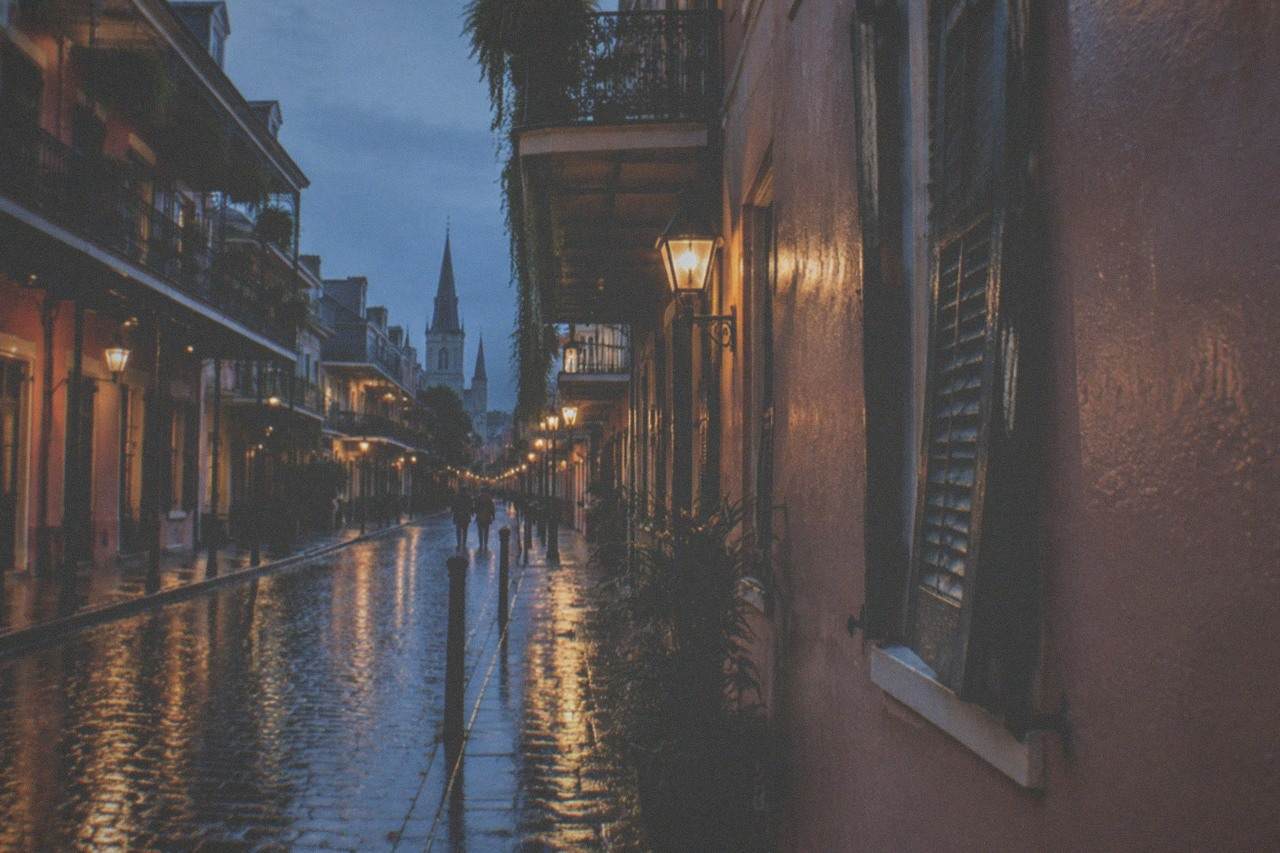
New Orleans ghost tours run year-round, mostly on foot and mostly after dark, in one of the most humid cities in the United States. What you wear decides whether you remember the stories or the sweat.
Short answer
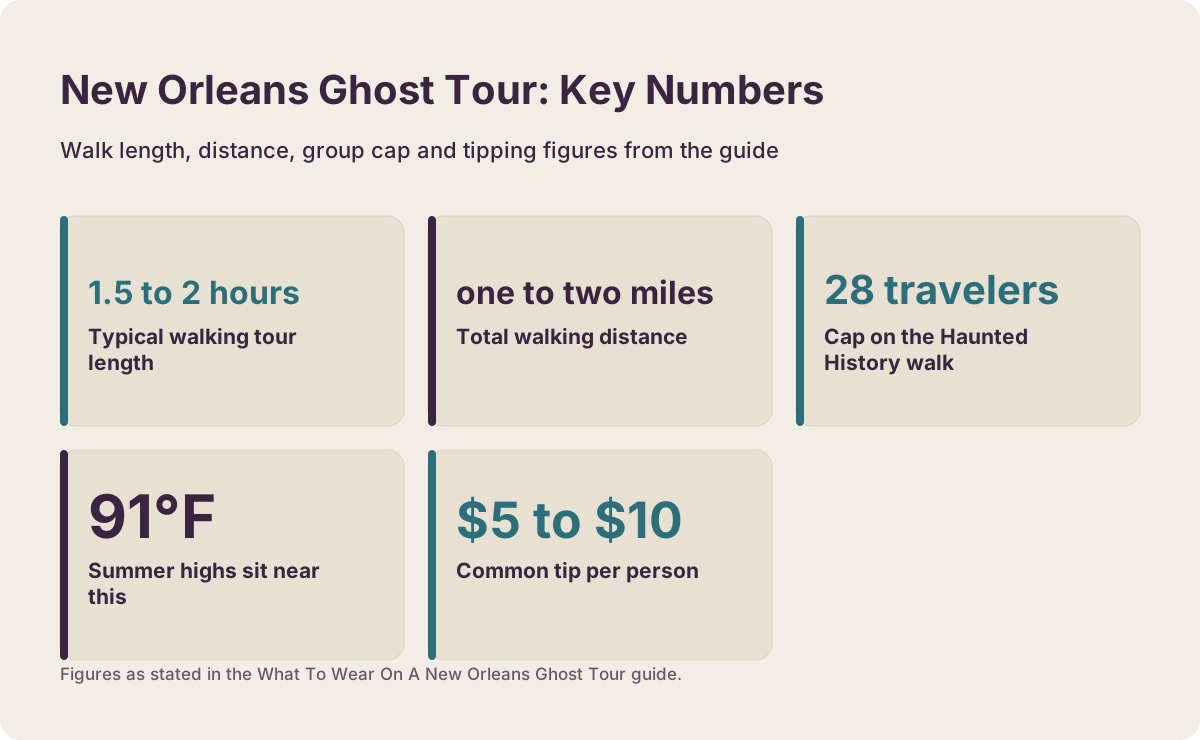
Wear breathable layers you can shed, closed-toe shoes with real grip, and bring a light rain layer in every season. Walking tours on this roster run 1.5 to 2 hours at a storytelling pace, from $30 to $37, and every guide you meet has passed a city history exam. Dress for humidity, not for haunts.
Ghost tours in New Orleans are walking events first and storytelling events second. The stories are the draw, but the physical reality is an hour and a half to two hours on your feet, almost entirely outdoors, on sidewalks that were laid in another century, in air that rarely dries out. The "Voodoo and Vampire Themes" walk from The Witches Brew Tour Company, the "Haunted History, Guided Walk" from Haunted History Tours, and the "Interior Visit, 2 Hours" tour from Tour Orleans all share that basic shape, and all of them cost between $30 and $37. What separates a good night from a miserable one is rarely the ghosts. It is the shoes, the layers and the water bottle.
This guide covers the practical side: what the weather actually does month by month, how far you will really walk, which fabrics and shoes hold up on French Quarter pavement, what to pack besides clothes, and one thing most packing lists skip entirely, which is how the city's own guide licensing exam quietly shapes the quality of the person talking to you in the dark.
What Should You Wear On A New Orleans Ghost Tour?
Dress for a humid evening walk, not a costume party: a breathable base layer, a light outer layer you can tie around your waist, closed-toe shoes with decent grip, and nothing you would mourn if a sudden shower caught it. Expect to stand still for long stretches while a guide tells a story, which means you will feel the evening's chill or mugginess more than a continuous walk would suggest.
The single most common mistake is dressing for the temperature of the moment you leave the hotel. New Orleans evenings shift. A January night can drop from the low 60s at dinner to the mid 40s by the tour's end, and a June night stays in the upper 70s with air you can almost chew. Layers solve both problems. A cotton or merino base with a light jacket or flannel over it covers the cold snaps, and in summer the "layer" is simply a shirt you can untuck and loosen.
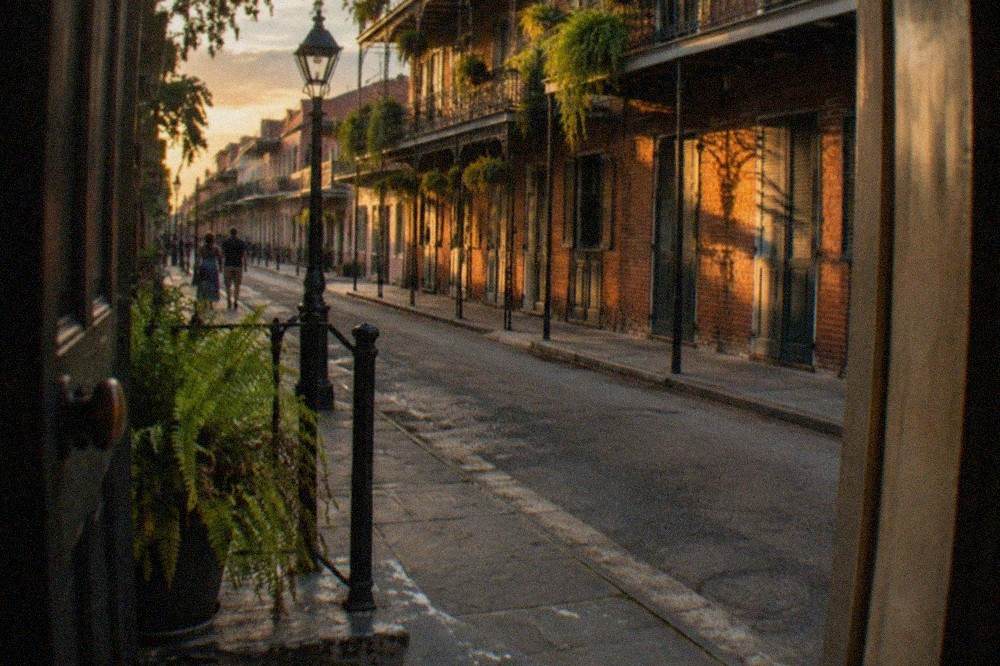
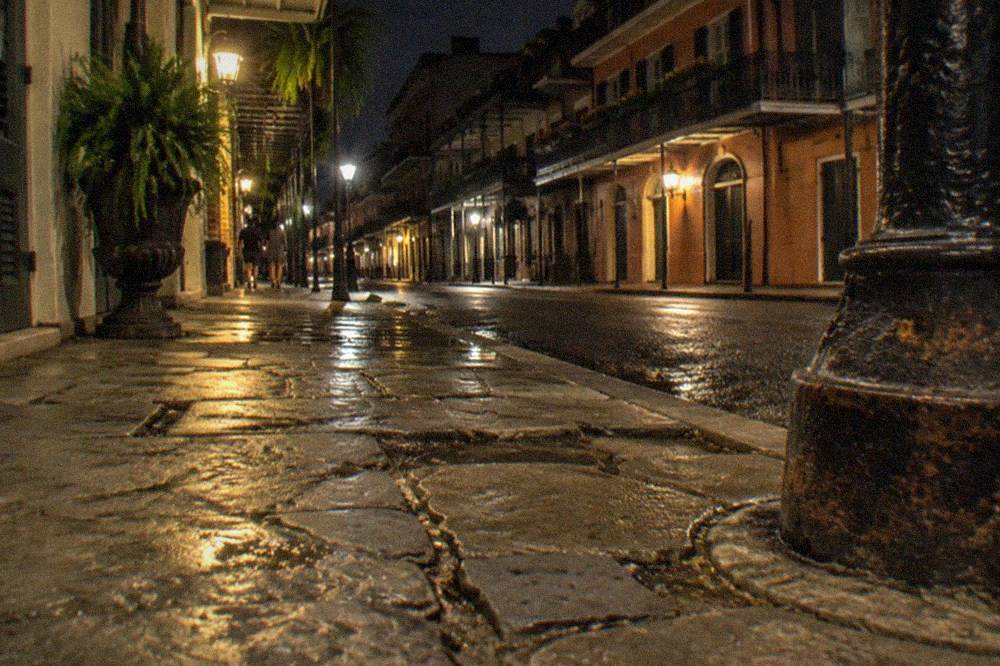
The second most common mistake is open shoes. The French Quarter's sidewalks are a patchwork of old flagstone, brick, uneven slabs and the occasional gap where a slab has heaved. Sandals and flip-flops work fine on Bourbon Street's closed sections, but a two-hour walk over broken pavement in the dark is a rolled ankle waiting to happen. Guides stop frequently, but you cover real ground between stops.
Color and costume barely matter. Some visitors enjoy wearing black or gothic touches on a ghost tour, and nobody will judge you either way, but the tours themselves are history walks with a macabre theme, not immersive theater. You will stand on public streets among regular pedestrians, in a neighborhood where residents are walking their dogs around the same corners the tour stops at. Dress like a person going to a casual dinner, and you will fit in.
How Does New Orleans Weather Shape Your Ghost Tour Outfit?
Plan around humidity, not just temperature: New Orleans is muggy in every month, summer highs sit near 91°F, and even January nights can feel damp and cooler than the thermometer reads. Bring a light rain layer in every season, because showers arrive quickly and the tours run in light rain. The comfortable windows are spring and late fall.
The city's average monthly numbers tell the story plainly. Summer is the hard season: June, July and August all average highs around 90 to 92°F, and the humidity pushes the heat index well above the actual air temperature during afternoon hours. Ghost tours depart in the evening, which helps, but a July or August night walk still happens in low 80s heat with heavy air. If you tour in those months, wear the lightest breathable fabric you own, avoid denim, and bring water.
Winter is milder than most visitors expect but damper than the numbers suggest. January averages a high near 63°F and a low near 46°F, and because the air carries moisture, an evening at 50°F in New Orleans can feel colder than the same reading in a dry climate. A real jacket, not just a hoodie, is worth packing from December through February. October is the sweet spot: highs near 81°F, lows near 64°F, drier air, and the lowest hurricane-season risk of the fall window.
Rain deserves its own paragraph. New Orleans gets sudden, heavy, short-lived showers at any time of year, and the walking tours on this roster generally run in light rain rather than cancel, so a packable rain shell or a compact umbrella earns its space in your bag every month. Check the forecast the afternoon of your tour, but do not overthink it: a poncho weighs nothing.
The Atlantic hurricane season runs June 1 to November 30, and NOAA's 2026 outlook predicted a below-normal season, but the practical takeaway for clothing is simple. In late summer and early fall, keep an eye on the weather and have a rain layer, and if a named storm is anywhere near the Gulf, your booking questions are better aimed at the operator's cancellation policy than at your jacket. Every product on this roster offers free cancellation up to 24 hours before, which covers most weather surprises short of an actual storm.
If you are choosing your travel dates around tour comfort rather than just clothing, the deeper month-by-month breakdown in our guide to the best time for a New Orleans ghost tour pairs well with this packing list.
With the weather picture settled, the three most-booked walking tours below all share the same evening, on-foot format, so one outfit decision covers them all.
How Far Do You Actually Walk On A Ghost Tour?
Expect roughly one to two miles of total walking spread across 1.5 to 2 hours, broken into short segments of a few blocks each with long standing stops for storytelling. The pace is slow and conversational, not a fitness walk, and the routes stay inside the French Quarter's compact grid, so you are never far from a bench or a bar.
The walking tours on this roster are not hikes. The "Voodoo and Vampire Themes" tour runs 1.5 to 2 hours and covers the French Quarter's core blocks, meeting at 311 Exchange Place, though the meeting point may vary, so confirm it on the live listing. The "Haunted History, Guided Walk" from Haunted History Tours runs a full 2 hours from the Vampire Apothecary Restaurant & Bar on St Peter Street, capped at 28 travelers per group. The "Interior Visit, 2 Hours" tour from Tour Orleans, from $37 with a 4.5 rating across 1,109 reviews, also runs 2 hours and includes a stop inside a haunted location, which is worth knowing for shoe choice: some interior stops have their own floor surfaces, and a couple of the historic buildings are not kind to slick soles.
What the distance means for clothing is that you need shoes comfortable for two hours of intermittent walking and standing, not shoes built for distance. Standing is actually the harder part. You will spend more total minutes stationary, listening, than in motion, and feet that are fine on a walk can ache from twenty minutes of standing on stone. Shoes with cushioned soles and some arch support beat both flimsy sandals and brand-new stiff boots.
A practical pacing note: tours end at night in a neighborhood that stays busy, and the walk back to your hotel is part of the evening. If you are staying outside the Quarter, factor in another half mile or so of walking after the tour ends. Our write-up on French Quarter safety at night covers the evening walk-back picture in detail, and the short version is that the main corridors stay well lit and populated late.
For travelers comparing the two-hour walks against the shorter cemetery formats, the distance math changes. The "Cemetery No. 1, 45 Minutes" tour covers far less ground, while the "Cemetery No. 3, Private Option" walk from Red Sash Tours runs 1.5 hours from the cemetery gates on Esplanade Avenue. The full format-by-format comparison lives in our guide to New Orleans ghost walking tours.
If the two-hour storytelling walk is your pick, the "Haunted History, Guided Walk" is the classic version of it.
If you would rather fold the whole evening into one booking before you finalize what to pack, the most-reviewed walking tour on the roster is an easy default, and its live listing shows tonight's departure times alongside the meeting point.
What Shoes Work Best On French Quarter Sidewalks?
Wear closed-toe shoes with rubber or lug soles and some cushioning: sneakers, trail-adjacent walking shoes or leather boots with grip all work. Skip heels, flip-flops and smooth leather soles, because the Quarter's pavement is uneven flagstone and brick, often damp in the evenings, and a tour cannot pause for a shoe emergency.
The French Quarter's sidewalks are historic in the literal sense. Many are original flagstone slabs, laid with gaps, tilted by a century of ground movement, and polished smooth by foot traffic in places. Add evening humidity, which leaves pavement faintly slick even without rain, and the case for grippy soles makes itself. A sneaker with a soft rubber outsole is the ideal. A boot with a lug sole is equally good and fits the mood of the evening better than most people expect.
What fails, reliably, is anything with a hard or smooth sole. Dress shoes, cowboy boots with leather bottoms and flat sandals all turn slippery on damp stone. Heels are worse than useless on the heaved slabs near the river. If your evening plans include dinner at a nicer restaurant before the tour, bring the walkable shoes anyway and change, or pick a restaurant where that is not a problem. Every guide on this route has watched someone in heels negotiate the corner of Royal and Governor Nicholls at a shuffle.
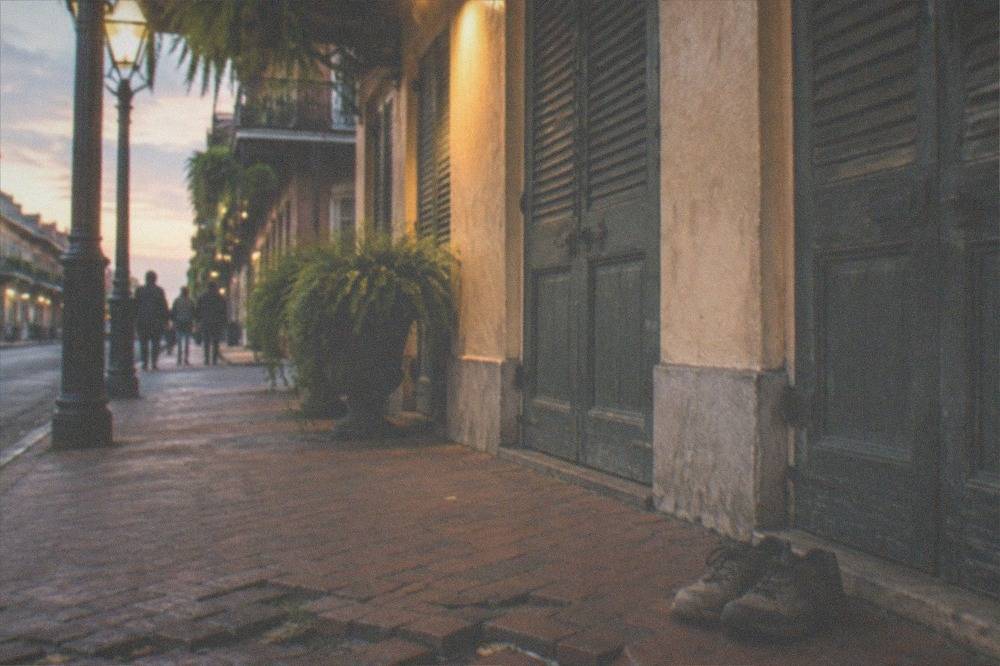
Socks matter more than people credit. In summer, thin moisture-wicking socks keep two hours of humid walking from macerating your feet. In winter, a wool-blend sock makes a 45°F evening standing stop dramatically more pleasant. Neither costs much, and both outperform any upgrade you could make to the shoe itself.
The interior-visit format is the one case where shoe choice has a second dimension. The "Interior Visit, 2 Hours" tour from Tour Orleans takes the group inside a haunted location, and historic interiors in the Quarter tend toward uneven wood floors and steep historic staircases. The same grippy, closed-toe rule covers it, with the added note that narrow toes and slick soles are worse on old stairs than on flat pavement.
A quick footwear summary before you check the closet:
| Shoe type | Works on Quarter pavement? | Why |
|---|---|---|
| Cushioned sneakers | Yes | Grip, cushioning for standing stops, breathes in humidity |
| Lug-sole boots | Yes | Best traction on damp flagstone, suits the evening's mood |
| Leather dress shoes | No | Smooth soles turn slick on damp stone |
| Heels | No | Heaved slabs and gaps make them a hazard |
| Flip-flops | No | No grip, no protection, no support for two hours |
That interior-visit tour is the format to pick if standing outside for two hours sounds unappealing, since part of the evening happens under a roof.
What Should You Bring Besides Clothes?
Pack light: a small crossbody or backpack with water, a compact rain layer, your phone for photos, and cash or card for a guide tip. You do not need flashlights, props or bug-spray arsenals, since the routes are street-lit and the tours supply any storytelling atmosphere themselves. Leave the big camera gear at the hotel.
Water is the item people forget. Two hours of humid-air walking, even slow walking, dehydrates you faster than the pace suggests, and in summer it matters double. A small bottle fits in a crossbody bag, and no guide will object to you drinking during a stop. In the cooler months you can skip it, but in June through September, bring it.
Bags deserve a sentence of honesty. The Quarter is a busy tourist neighborhood, and a crossbody bag worn in front of your body is the local standard for a reason. A large backpack marks you as a visitor, gets in the way in the tight standing groups, and is more work to keep track of in a crowd. Small and worn forward is the rule.
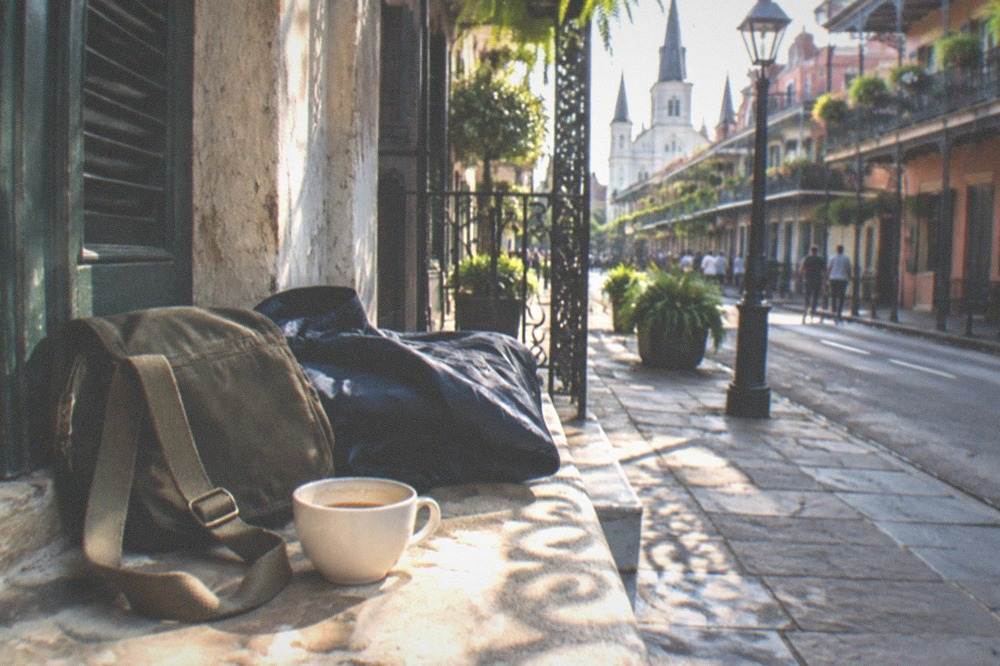
Tipping is normal on these tours and worth budgeting alongside the ticket. The standard logic is the same as any guided walk: if the guide did a good job, a tip in the $5 to $10 per person range is a common allowance, though it is entirely discretionary and no listing promises otherwise. Bring it in cash if you can, since guides on foot do not run card readers at the final stop.
One clothing-adjacent item earns its place in summer: insect repellent. Evening walks near the river and through the Quarter's shadier corners can attract mosquitoes from roughly May through October, and a quick application before the meeting point saves scratching through the best story of the night. In winter, skip it.
Are Ghost Tours Suitable For Kids, And What Should They Wear?
Most walking ghost tours welcome children but are built for adults' attention spans, so kids aged roughly 10 and up get the most from them. Dress children in the same layers and closed-toe shoes as the adults, and expect the content to include real historical violence, presented as history, not as a haunted-house jump scare.
The walking products on this roster do not carry a blanket age restriction the way the pub crawls do, but the content is worth previewing. The stories that make New Orleans famous for hauntings, the LaLaurie Mansion narrative chief among them, involve genuine and grim history. As the tours tell it, the mansion at 1140 Royal Street was the site of horrific cruelty discovered in the house, and no tour softens that for young audiences. Parents know their kids best; a ten-year-old who loves creepy stories will have a fine evening, and a sensitive six-year-old will not.
The one roster product with a stated age line is the "Night Bus Tour, Exclusive Access" cemetery bus tour, where the operator states the tour is not suitable for children under 10. The pub crawls are strictly 21 and over, which we cover below. For the full age-by-format breakdown, including which tours genuinely work for families, see our guide to a New Orleans ghost tour with kids.
Clothing for children follows the adult logic with two adjustments. First, kids feel cold faster when standing still, so their outer layer should be one step warmer than yours. Second, their shoes take more abuse, since children treat a two-hour walk as an obstacle course; the same closed-toe, grippy rule applies, with extra emphasis on shoes they have already broken in. A new-shoe blister at minute forty is a tour-ender.
How Does The City's Guide Licensing Exam Shape The Tour Itself?
Every paid guide walking you through the Quarter has passed a city-administered written exam on New Orleans history and culture with a minimum score of 70%, cleared a federal background check, and paid for a two-year permit. This is why the storytelling on a legitimate tour tends toward documented history with legend clearly framed, rather than improvised spookiness.
This is the part of the evening your clothing cannot touch but your expectations should. The City of New Orleans requires anyone conducting paid tours to hold a tour guide permit issued through the Ground Transportation Bureau, under City Code Chapter 30, Article XXI. The requirements are concrete: applicants must be 18 or older, have no felony conviction in the preceding five years, pass the written history and culture exam at 70% or better, and submit a federal background check. A new permit costs $50, a renewal costs $20, and it is valid for two years. The city's own permit page lays out the full process, and it is a real gate, not a rubber stamp.
The practical effect shows up in the tour's texture. A licensed guide has been tested on the city's actual history, and the better tours wear that knowledge openly: dates, names, building histories, and a clean separation between what the record shows and what legend adds. When a guide on the "Haunted History, Guided Walk" tells you the LaLaurie story, the framing is usually explicit about which parts are documented and which parts are the folklore that grew around the house. That separation is a feature, and it is partly a product of the exam standard sitting behind every badge.
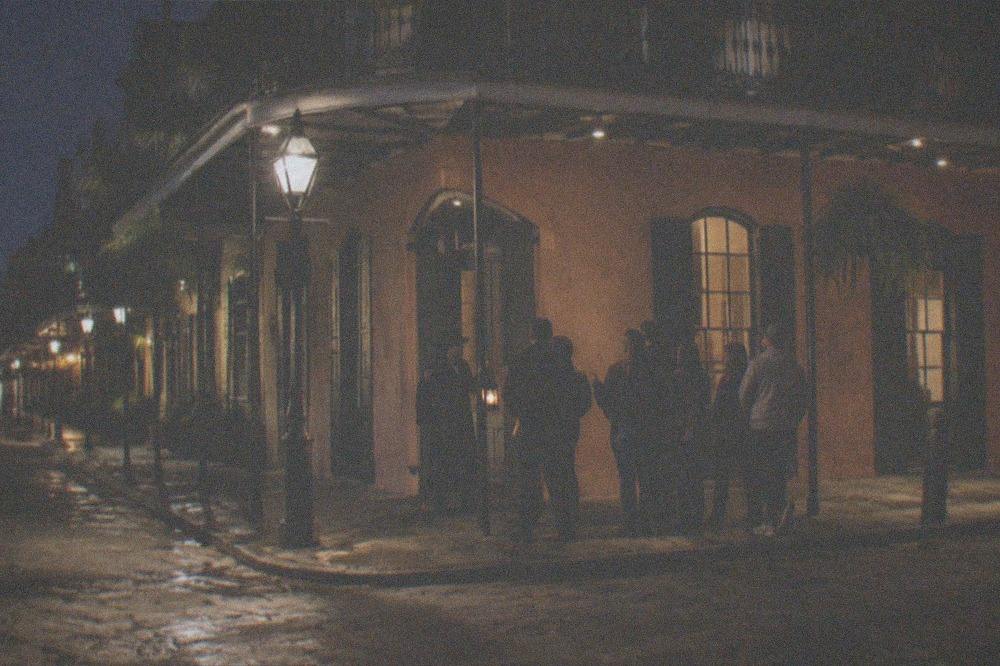
It also gives you a way to ask good questions. Because guides are tested on the whole city, not just one route, a question about the building you are standing next to, the cemetery you passed, or the neighborhood's history generally gets a real answer. The city's requirements for tour operators are published alongside the permit rules, and the badge a licensed guide carries is supposed to be visible while conducting tours.
The licensing story connects to clothing only once, but it is worth the connection: dress for standing and listening, because the evening is genuinely a history lecture delivered in the street, at night, by someone who studied for it.
What Should You Wear For A Haunted Pub Crawl?
Dress for bars first and walking second: the two haunted pub crawls on this roster are 21-and-over only with government photo ID required, so bring your ID in a secure pocket, wear evening-casual clothes you can sit in at three bars, and keep the closed-toe shoes for the blocks between stops.
The pub crawl format changes the packing math. The "21+ Pub Crawl, LaLaurie" tour from New Orleans Ghost Adventures, from $37 with a 4.5 rating across 2,212 reviews, visits Lafitte's Blacksmith Shop Bar, passes the LaLaurie Mansion exterior, and includes a complimentary drink at the last stop, with other drinks at your own cost. The "Three Haunted Bars, Free Shot" walk from Big Easy Walking Tours, from $18, visits three haunted bars and includes a free shot. Both run about 2 hours, both are adults only, and both check ID at the start, so the ID is not optional; Louisiana's drinking age is 21 and the listings enforce it directly.
Clothing-wise, evening-casual is the register: dark jeans, a nice shirt, boots or sneakers rather than heels. You are entering real bars in a nightlife district, not a costume event. The one item that matters more than usual is the ID, and the one that matters less than usual is the rain layer, since much of the evening is indoors. The walking segments between bars are short, a few blocks each, but the pavement is the same uneven stone as everywhere else in the Quarter, so the shoe rule survives the format change.
One legal note worth knowing before you dress for any French Quarter evening: the city's open-container allowance for plastic "go-cups" applies only within the defined French Quarter zone, bounded by Canal Street, Rampart Street, Esplanade Avenue and the river, and glass containers are banned outright on the streets there. It is not a blanket citywide allowance, and it does not follow you into a vehicle. The pub crawl guides handle this within the tour, but knowing the boundary saves you from carrying a drink outside the zone.
Which Tour Format Matches Your Outfit And Your Evening?
Match the format to your comfort tolerance: the two-hour walking tours need the full layering and footwear treatment, the 45-to-55-minute cemetery tours are short enough for almost any shoes, and the bus tours, one with hotel pickup, need almost nothing but the ID and a light layer. The outfit follows the format, so pick the format first.
The roster's five formats each carry a different practical load. Here is how they compare for the dressed-for-comfort traveler.
| Format | Typical duration | Walking load | Clothing priority |
|---|---|---|---|
| Walking ghost tour | 1.5 to 2 hours | 1 to 2 miles, stop-and-go | Layers, grippy closed-toe shoes, water |
| Cemetery tour (No. 1) | 45 minutes to 2 hours | Low, inside one cemetery | Sun protection for daytime, comfortable shoes |
| Vampire-themed walk | 2 hours | Similar to ghost walks, evening | Light layers, evening comfort |
| Haunted pub crawl (21+) | 2 hours | Short segments, 3 bars | Evening-casual, secure ID pocket |
| Bus tour | 2 hours to 2 hours 15 minutes | Minimal, between stops | Light layer for AC and evening |
The daytime cemetery formats deserve a specific note: they flip the clothing problem from evening chill to daytime sun. St. Louis Cemetery No. 1 has almost no shade, and the tours run in daylight, so a hat, sunscreen and water matter more there than on any evening walk. The cemetery access rules are strict, licensed-guide-only since March 2015 under Archdiocese policy, and the honest ways in are covered in our guide to New Orleans cemetery tours.
The bus formats are the low-effort options. The "Bus Tour With Hotel Pickup" from New Orleans Native Tours, from $55 and the most expensive product on the roster, is the only one that picks you up at most French Quarter and Business District hotels, and the "Night Bus Tour, Exclusive Access" from Tour Orleans, from $36, runs after dark with EMF detectors, with the operator noting it is not suitable for children under 10. Neither needs special clothing beyond a layer for the vehicle and the outdoor stops.
A quick planning summary for the whole evening:
| Season | Base layer | Outer layer | Shoes | Extras |
|---|---|---|---|---|
| Dec to Feb | Long sleeve | Real jacket | Closed-toe, warm socks | Beanie or scarf for standing stops |
| Mar to May | Breathable shirt | Light jacket or flannel | Sneakers | Rain layer, water |
| Jun to Aug | Lightest breathable shirt | None | Breathable sneakers | Water, insect repellent, untucked fit |
| Sep to Nov | Breathable shirt | Light layer | Sneakers | Rain layer, water through September |
The "Voodoo and Vampire Themes" walk remains the most-reviewed walking tour on this roster, 4.5 across 3,221 reviews, from $33, and its 1.5-to-2-hour evening format is exactly the outing this packing list was built around.
One last practical note on timing: October is the busiest stretch of the year for these tours, with the Krewe of Boo parade, the city's official Halloween parade since 2007, scheduled for Saturday, October 24 in 2026, and the operators running their standard nightly schedules under peak demand. Book a week or more ahead in October, and check the meeting point on the live listing the day of your tour, since the "Voodoo and Vampire Themes" meeting point can vary.
However you dress, the evening comes down to a licensed guide, a lamplit street and a story worth standing still for. The planning pages on New Orleans Haunted Tours cover the rest of the lineup, from cemetery access to hotel hauntings, and the three walks below are the natural next step for tonight.
Common Questions About What To Wear On A New Orleans Ghost Tour
What shoes should I wear on a New Orleans ghost tour?
Closed-toe shoes with rubber or lug soles and some cushioning. The French Quarter's sidewalks are uneven historic flagstone and brick, often damp in the evenings, so sneakers or grippy boots are ideal and smooth-soled dress shoes, heels and flip-flops are the reliable failures.
How far do you walk on a New Orleans ghost tour?
Roughly one to two miles over 1.5 to 2 hours, broken into short walking segments with long standing stops for storytelling. It is a slow, conversational pace inside the French Quarter, not a fitness walk, and the tours stay near benches and bars throughout.
Do New Orleans ghost tours run in the rain?
Generally yes, in light rain, so bring a packable rain layer or compact umbrella in every season. New Orleans showers tend to be sudden and short. If serious weather threatens, every tour on this roster offers free cancellation up to 24 hours before.
Is a New Orleans ghost tour suitable for kids?
The walking tours have no blanket age restriction, but the content includes real, grim history, so roughly 10 and up is the practical floor. The pub crawls are strictly 21 and over with government photo ID, and the night cemetery bus tour's operator states it is not suitable for children under 10.
What should I wear on a New Orleans ghost tour in summer?
The lightest breathable clothing you own, with moisture-wicking socks and real walking shoes. Summer evenings stay in the low 80s with heavy humidity. Skip denim, bring water, and apply insect repellent before the meeting point from May through October.
Do I need to bring ID on a ghost tour?
Only on the pub crawl formats, where a valid government photo ID is required and checked, per Louisiana's drinking age of 21. The standard walking ghost tours do not require ID, though carrying some form of ID on any evening out in the Quarter is sensible.